

THERMI THESSALONIKI
IPGRB - Institute of Plant Breeding and Genetic Resources
The Institute of Plant Breeding and Genetic Resources was established in 2014 (Government Gazette, Series B, No. 2889/27.10.2014), through the merger of nine (9) former units of the General Directorate of Agricultural Research, including historic agricultural research institutes in the country. It began operating on 01-01-2015.
Research activities are carried out at the Thermi Research Unit in the following fields:
- Plant Breeding and Genomics.
- Sustainable Cropping Systems.
- Plant Protection.
- Renewable Energy Technologies in Agriculture.
- Chemistry and Technology of Plant Products.
The facilities of the Greek Gene Bank are also located at Thermi Campus.
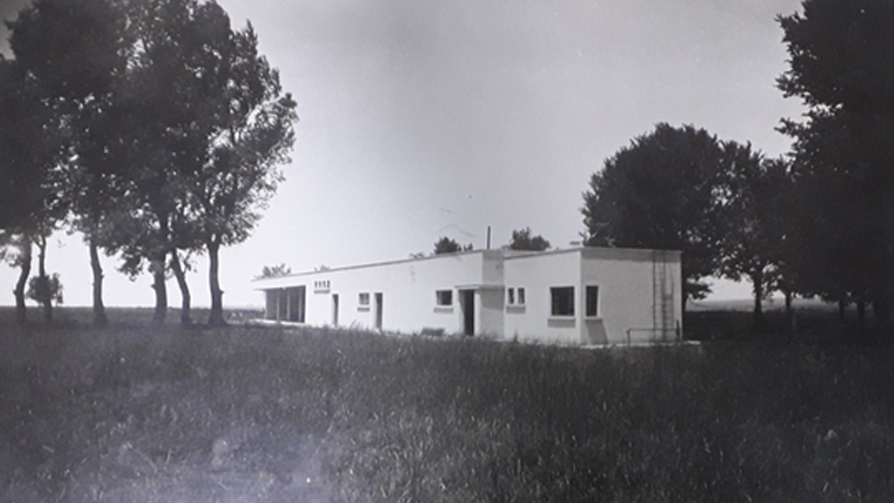
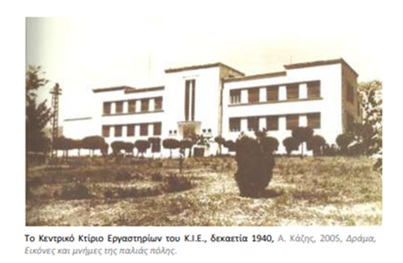
Τhe Institute’s history
The following units were integrated into the Thermi Institute/Research Unit:
1. Cereal Institute
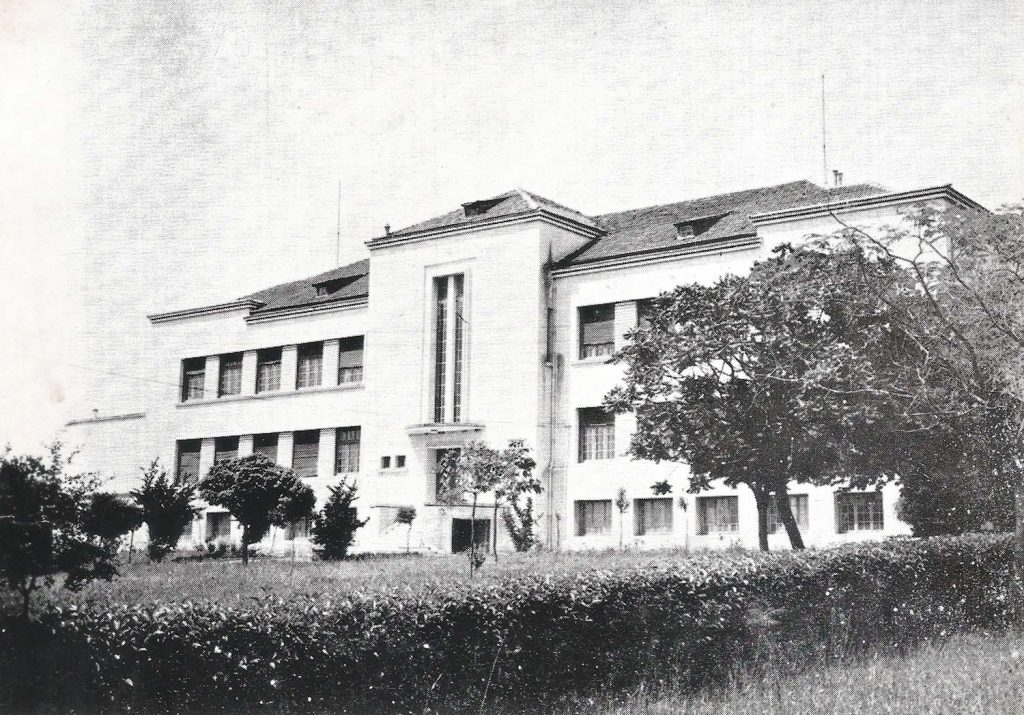
was the oldest agricultural research institute in the Balkans. Its history begins with the establishment of the first experimental fields in four regions of country by academic Ioannis Papadakis (1903–1996), which formed the basis for the systematic development of organized agricultural research in Greece. In 1924, the “Special Plant Improvement Station” was established in Larissa and was subsequently relocated to Thessaloniki in 1927. In 1931, it was renamed as “Institute of Plant Breeding,” and in 1961 it was reconstituted as the “Cereal Institute,” with research focused exclusively on cereals.
The main research objective has remained the same since the Institute was founded. As Ioannis Papadakis described it in 1928, "it is to find or create new varieties (new types) of plants, which, when sown in the same fields and receiving the same cultivation care, which are also received by the seeds sown today, to give greater yields in terms of quantity and quality."
In particular, for the first 20 years or so, the main objective was to create high-yielding bread wheat varieties to address the country's wheat deficit. Wheat self-sufficiency was achieved for the first time in 1957 with the new varieties created at the Institute, which increased the yield per ha from 0,08 to 0,3 tons.
A milestone was the bread wheat variety with the code G-38290, which came from the Rieti x Quality cross and became known to Greek farmers as Numero (Number). In 1942, it entered seed production, and since 1950, for 20 consecutive years, it was sown on 70% of the area cultivated with wheat.
Research on durum wheat, barley, and oat began in the 1930s, on maize in 1946, and on rice in 1958.
To date, more than 115 cereal varieties and hybrids have been created and registered in the National and Common Catalog of Cultivated Plant Varieties, while the presence of 35 cereal varieties on the market and in seed production today is very important.
2. Cotton Institute (CI)
was founded in 1931, under Law 5211/1931, following a memorandum submitted by Professor Vasileios Christidis to the Prime Minister of Greece, Eleftherios Venizelos.
The primary objective of CI was to promote cotton cultivation in Greece through the development of cotton varieties well adapted to the country’s soil and climatic conditions, as well as through the introduction and dissemination of modern cultivation techniques. In 1936, the CI was reorganized and divided into two separate bodies: the Cotton and Industrial Plants Institute (CIPI), responsible for research and technological development, and the Hellenic Cotton Organization (HCO), whose main role was the practical implementation of research findings, as well as textile processing and quality control.
The CIPI developed important high-yield and high-quality cotton varieties, such as 4S, Sindos-80, Korina, Eva and Zeta 2, significantly contributing to the expansion of cotton cultivation in Greece. By 1996, the total cultivated area reached approximately 450,000 hectares, and Greek cotton ranked among the top ten countries worldwide in terms of quality. In 1990, the CIPI was incorporated into the research institutes of the National Agricultural Research Foundation (NAGREF) and subsequently into the Hellenic Agricultural Organization – DEMETER (ELGO-DIMITRA).
3. Plant Protection Institute
The Institute was incorporated into the National Agricultural Research Foundation (NAGREF) in 1989.The Institute’s primary mission was the study and management of pests, weeds, and diseases affecting cultivated plants. Its principal research areas included plant pathology, entomology, weed science, and the evaluation of plant protection products. A significant portion of its research focused on integrated plant protection and the reduction of losses in agricultural production.
The Institute made a significant contribution to the improvement of agricultural production, the reduction of crop losses due to diseases, the development of plant protection in Greece, the training of agronomists, the support of producers. For many decades, it constituted one of the principal plant protection centers in the country.
4. Agricultural Research Center of Northern Greece (ARCNG)
It was established by the Law 915/1981 and at research level, the following departments operated: Vegetable Crops, Aromatic and Medicinal Plants, and the Greek Gene Bank (GGB).The activities of ARCNG were transferred to the National Agricultural Research Foundation (NAGREF) in 1990, and subsequently, in 2014, it was incorporated into the Institute of Plant Breeding and Genetic Resources (IPBGR) of ELGO-DIMITRA.
ARCNG developed research projects in the following areas:
Breeding of horticultural crops, and in particular creation, preservation, and improvement of many traditional vegetable varieties, several of which in seed production, with growing commercial interest. Development of new improved varieties to meet modern requirements, and conservation of 26 commercial vegetable varieties of great renown and value.
Collection, conservation, and evaluation of plant genetic resources, of importance to food and agriculture, implemented through the Greek Gene Bank, with the aim of safeguarding agro-diversity, supporting sustainable agricultural development, and enhancing food security.
Aromatic and medicinal plants (MAPs): Collection, ex situ conservation – Documentation – Evaluation and utilization of MAPs native resources, breeding, agrotechnology and quality control.
Νative species of Greek flora -
Rare, endemic and endangered plants.
5. Laboratory for the Analysis of Cigarettes and Tobacco Products (Drama)
The laboratory was part of the former Tobacco Institute of Drama, which was established in 1930, following an initiative launched in 1925 to study tobacco cultivation and production. Drama was selected as its headquarters due to its central location within Greece’s most important tobacco-producing regions.
Main Achievements Development of all Oriental tobacco varieties cultivated in Greece from 1937 to the present, as well as the development and introduction of Virginia and Burley varieties adapted to Greek soil and climatic conditions. Improvement of cultivation practices, provision of technical support to producers, and quality assurance of seeds. Testing of cigarette brands marketed in Greece (1992–2016) for tar, sugars, and nicotine in accordance with European Directives. Study of the chemical composition of tobacco and tobacco smoke, as well as analysis of the physical and technological characteristics of dried tobacco, and representation of Greece in international organizations related to tobacco products.