
Horticultural Crops
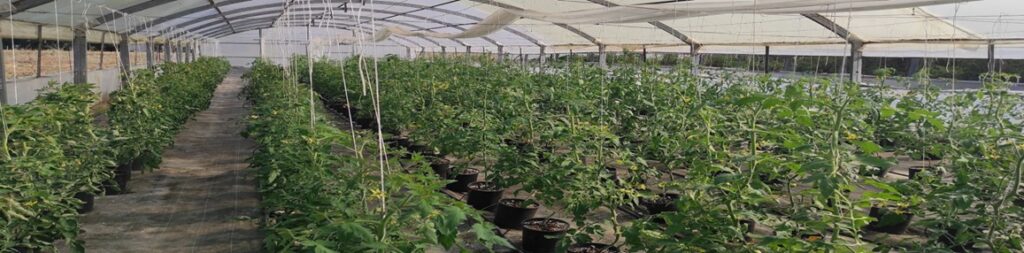
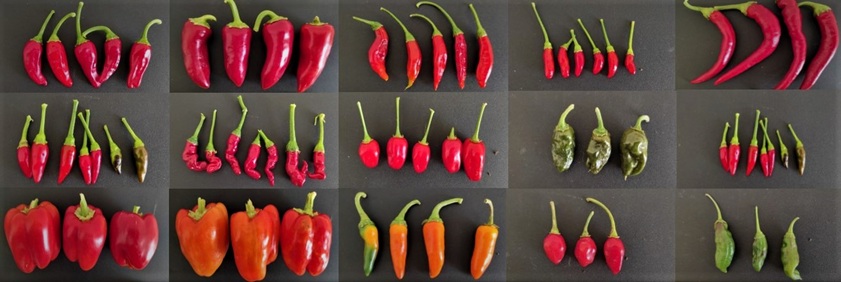
Under the escalating challenges of climate change, the horticultural crop breeding group is dedicated to the rigorous evaluation and development of new varieties that demonstrate enhanced resilience to a spectrum of environmental stressors, including extreme temperature fluctuations, prolonged drought, and heightened pest and disease pressures. Our approach leverages the rich genetic diversity within both annual and perennial horticultural crops, encompassing vegetables, fruit trees, and medicinal and aromatic plants. We strive to improve key phenotypic, agronomic, and qualitative traits, ensuring a stable and nutritious food supply. Our research methodologies integrate conventional breeding practices with cutting-edge genetics and genomics technologies. By combining traditional expertise with advanced technologies, we aim to accelerate the development of climate-resilient horticultural crops that meet the evolving demands of Agroindustrial community.
- Evaluation, conservation, and breeding of Greek varieties registered at the National Plant Variety Catalogue.
- Production of healthier (antioxidants, vitamins) and tastier fruits and vegetables.
- Genetic Improvement of plant stress tolerance towards abiotic factors.
- Grafted vegetables: the effect of grafting on quality and tolerance.
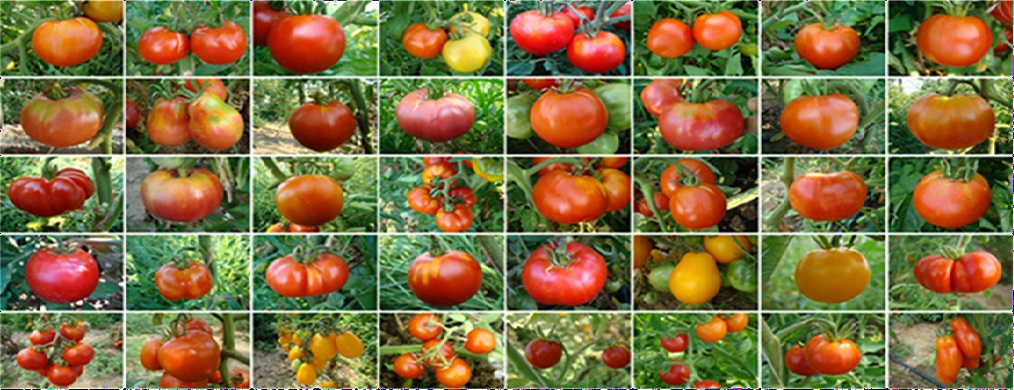
- Biodiversity and genetic variation: how to enrich the genetic pool of modern varieties using landraces and/or wild-relatives.
- Phenotyping to select the most promising specimens for breeding new varieties .
- Breeding the holobiome’ approach: beneficial microorganisms that promote vegetable growth and abiotic resistance.
Medicinal & Aromatic Plants (MAPs)
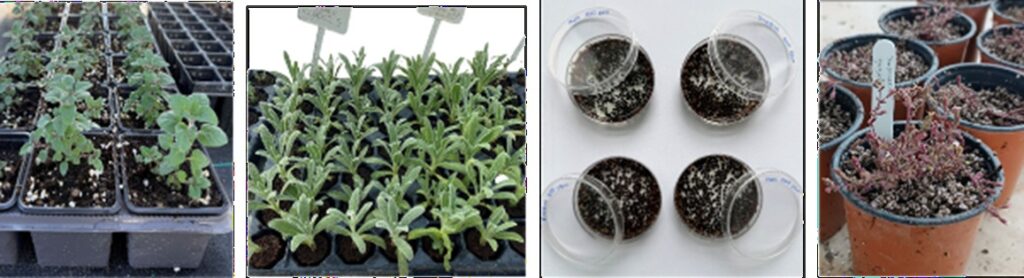
In a rapidly changing global environment characterized by an increasing demand for high-value natural products, our research focuses on the genetic improvement and evaluation of emblematic Medicinal and Aromatic Plants (MAPs). Our primary objective is the identification and development of novel genotypes that possess superior phytochemical potential but also genetic and phenotypic stability, specifically tailored to meet the specialized requirements of the modern pharmaceutical, cosmetic, and food industries. Our research scope ranges from the study of secondary metabolite biosynthesis in planta and in heterologous production systems (yeast, bacteria) to the strategic valorization of native biodiversity. We integrate classical breeding methodologies with cutting-edge technologies, including genomics, metabolomics, and biotechnology. By conducting comprehensive studies on the interactions between genotype, environment, and cultivation practices, we aim to develop stable and high-yielding cultivars that enhance the competitiveness of the agri-food sector and promote the sustainable utilization of natural resources.
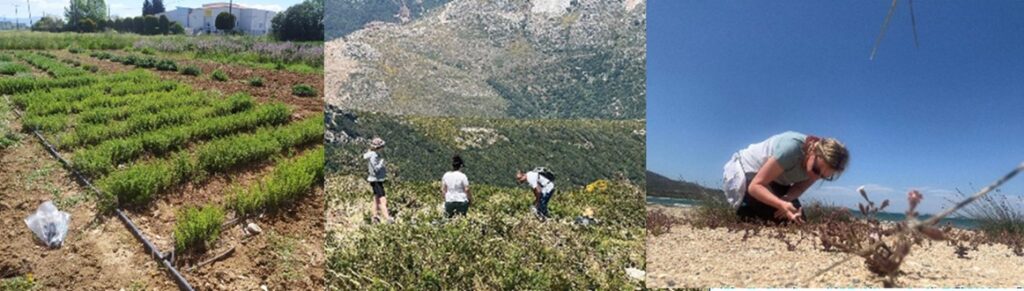
- Biodiversity valorization and germplasm management: Characterization and conservation of Greek endemic and endangered species, evaluating their potential as multifunctional crops.
- Genetic breeding and pre-breeding evaluation: Selection and development of superior genotypes in emblematic MAP species, targeting high yield and stability of qualitative traits.
- Adaptation to low-input systems: Implementation of breeding strategies to achieve high productivity under climate pressure and resource-limited conditions.
- Phytochemical mapping and metabolomics: Determination of the chemical fingerprint of wild and cultivated species to identify bioactive compounds (polyphenols, saponins, terpenes).
- Secondary metabolite biosynthesis: Investigation of metabolic pathways for specialized metabolites and the impact of abiotic factors (e.g., LED lighting spectra, water stress) on their accumulation.
- Biotechnology and alternative production systems: Development of advanced protocols and biomass production strategies for the sustainable manufacturing of rare, high-value metabolites.
| Dr Apostolos Kalivas | akalivas@elgo.gr |
| Dr Ifigeneia Mellidou | imellidou@elgo.gr |
| Dr Christos Bazakos | cbazakos@elgo.gr |
| Dr Aliki Xanthopoulou | axanthopoulou@elgo.gr |
| Dr Efstathios Roumeliotis | stathisroumel@elgo.gr |
| Dr Eirini Sarrou | esarrou@elgo.gr |
| DR. Paschalina Chatzopoulou | pchatzopoulou@elgo.gr |